



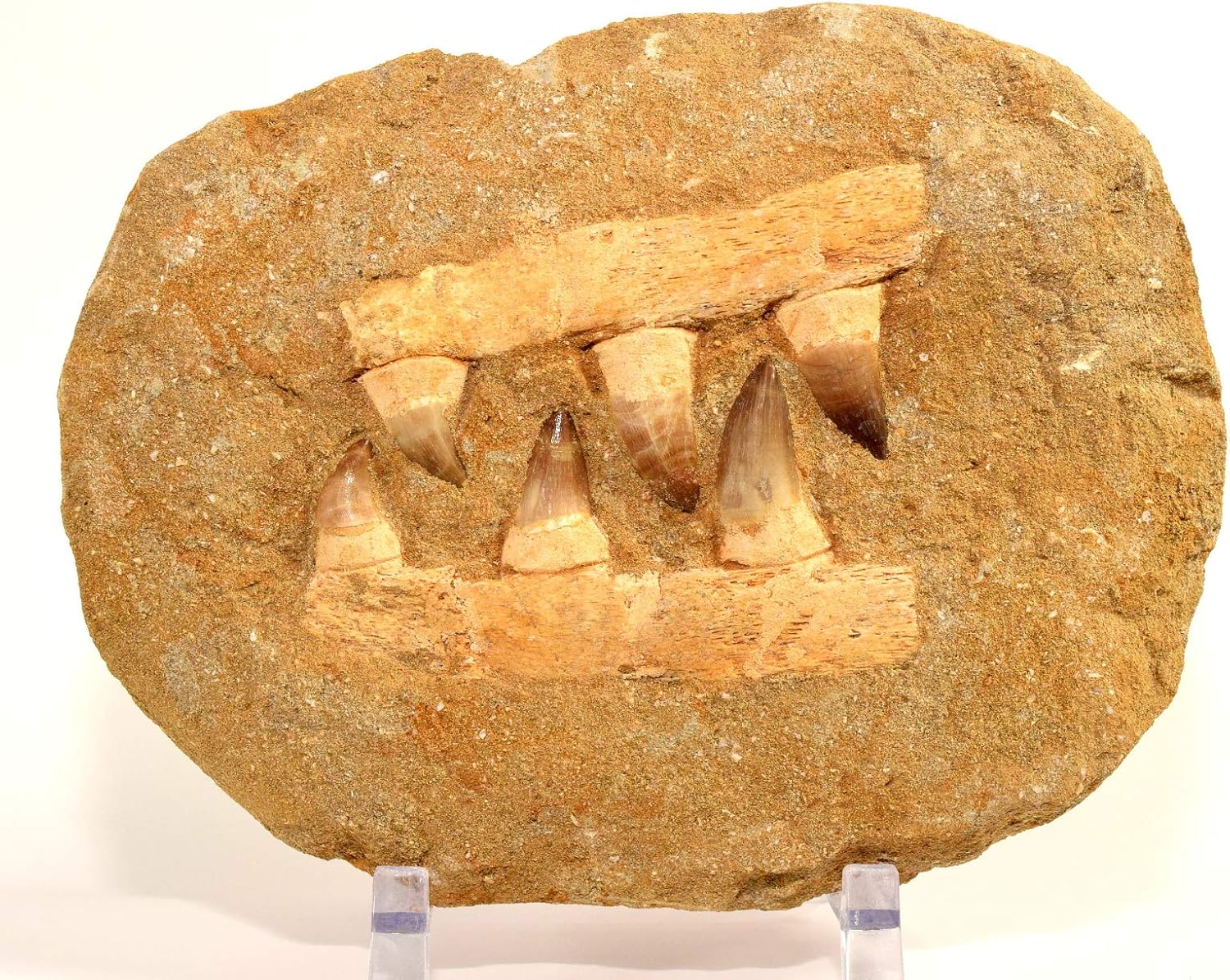
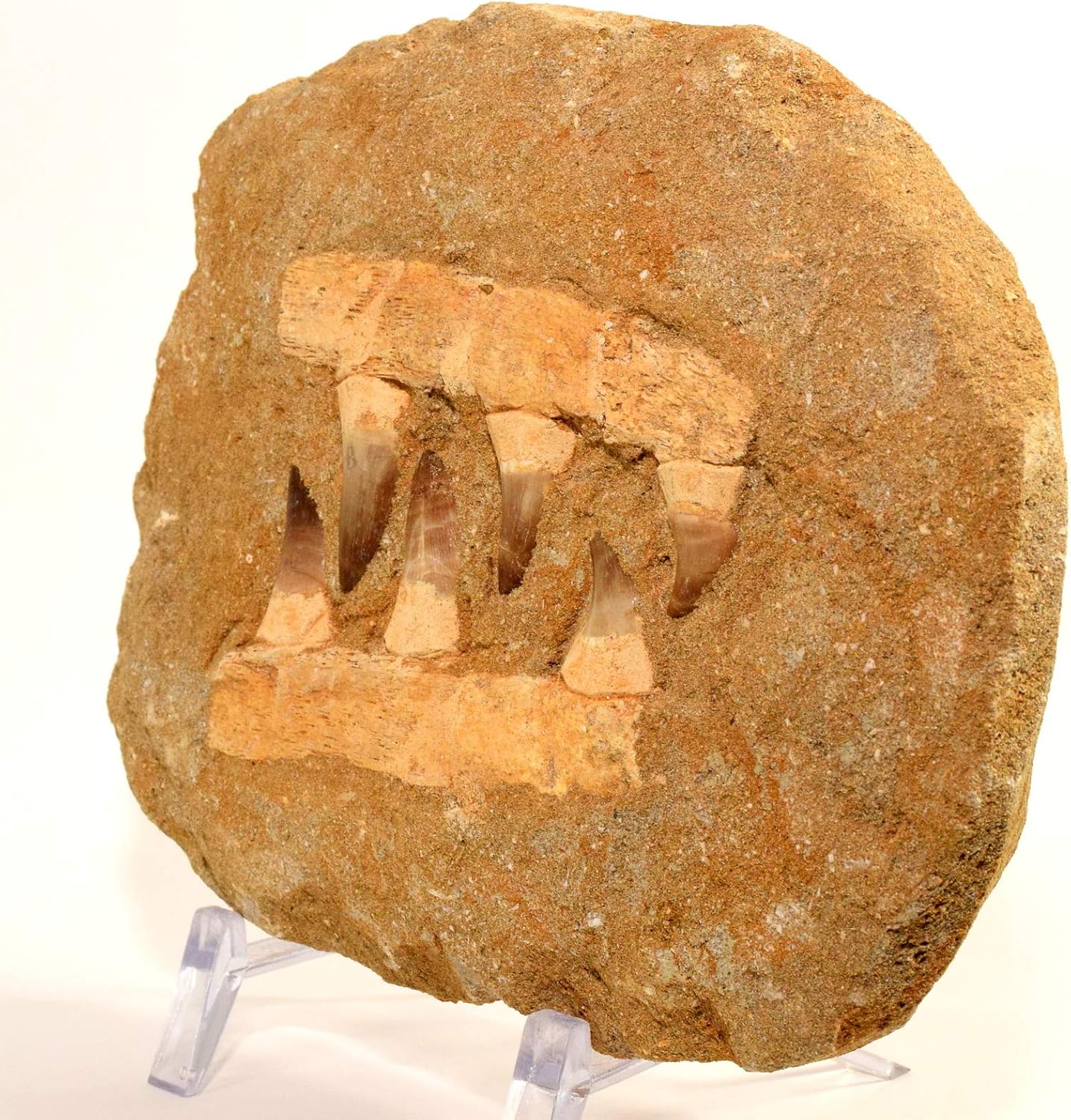
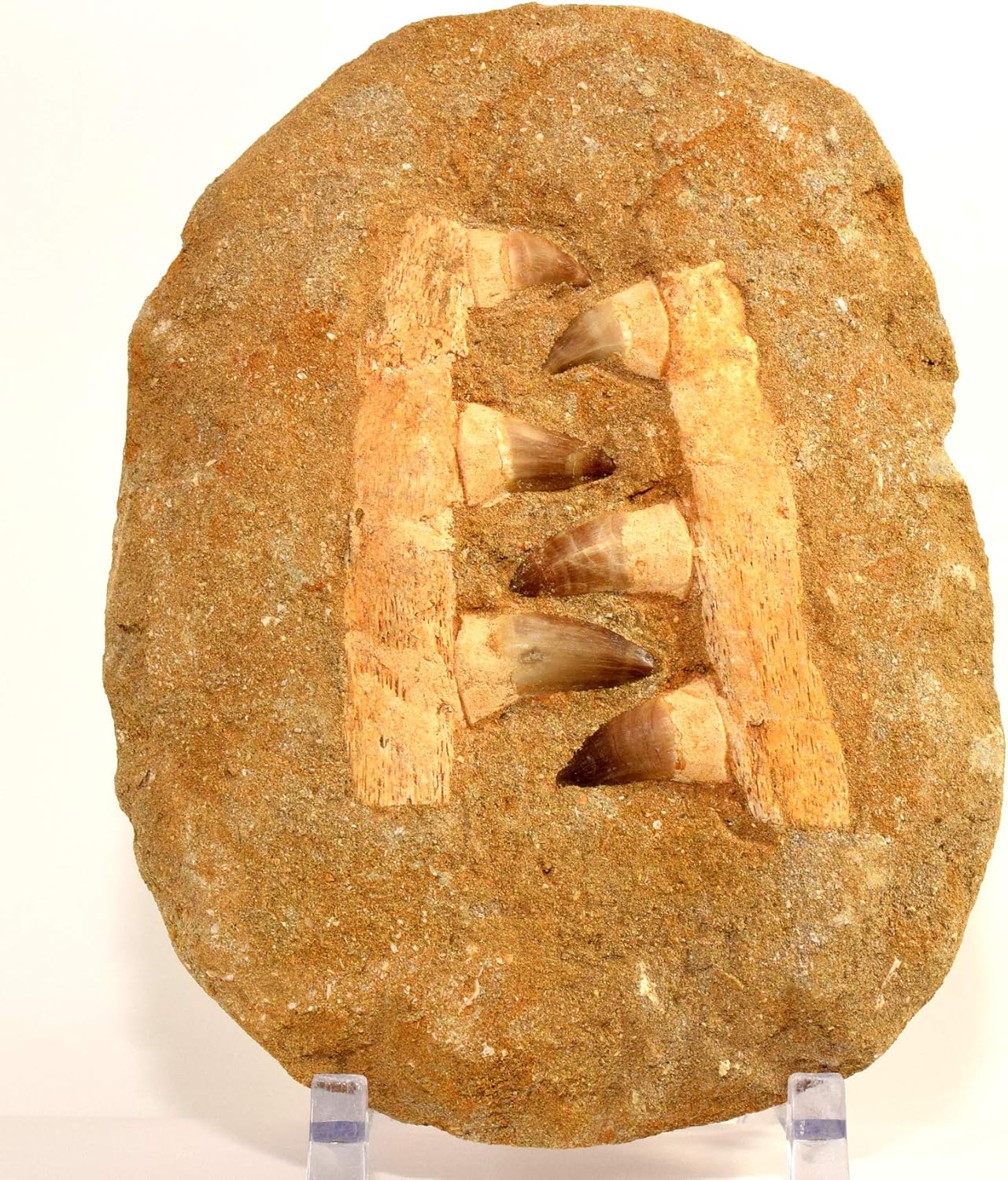

HQRP-Crystal 3.4LB 8.2" Large Mosasaur Jaw Teeth Fossil Bone Cretaceous Period Fossilized Dinosaur Tooth Stone Specimen - Morocco

 4.7 (121 items)
 Limited Time Sale
$54.00 cheaper than the new price!!
Free cash-on-delivery fees for purchases over $99
Product details
| Management number | 211310760 | Release Date | 2026/04/04 | List Price | $36.00 | Model Number | 211310760 | ||
|---|---|---|---|---|---|---|---|---|---|
| Category | |||||||||
Mosasaurs had a body shape similar to that of modern-day monitor lizards, but were more elongated and streamlined for swimming. Their limb bones were reduced in length and their paddles were formed by webbing between their elongated digit-bones. Their tails were broad, and supplied the locomotive power. Until recently, mosasaurs were assumed to swim in a similar method used today by the conger eel or sea snakes. However, new evidence suggests many advanced mosasaurs had large crescent-shaped flukes on the ends of their tails similar to those of sharks and ichthyosaurs. Rather than snake-like undulatory movement, their bodies probably remained stiff in these mosasaurs to improve hydrodynamic efficiency through the water, while the end of their tails provided strong propulsion. The animal may have lurked and pounced rapidly and powerfully on passing prey, rather than hunting for it. A juvenile Prognathodon found in Jordan's Harrana Site in 2008 and described in 2013 supports this, as the outline of its tail fluke was also preserved with the skeleton.
- You will receive exactly this Mosasaur Jaw - 210mm x 164mm x 44mm / 8 1/4 x 6 1/2 x 1 3/4 Inches; 1570g / 55.4 oz / 3.4 lb (see photo, stand not included, the photos are taken under bright light)!
- Mosasaurs ("Lizard of the Meuse River") are large, extinct, marine reptiles. The first fossil remains were discovered in a limestone quarry at Maastricht on the Meuse in 1764 in Holland. Mosasaurs probably evolved from semiaquatic squamates known as aigialosaurs, which were more similar in appearance to modern-day monitor lizards, in the Early Cretaceous. During the last 20 million years of the Cretaceous period (Turonian-Maastrichtian) mosasaurs became the dominant marine predators.
- Mosasaurs lived in the seas during the Cretaceous. Fossils are found in Cretaceous rock units on almost every continent from North and South America, to Europe, Asia, and Australia.Mosasaurs breathed air, were powerful swimmers, and were well-adapted to living in the warm, shallow, epicontinental seas prevalent during the Late Cretaceous Period. Mosasaurs were so well adapted to this environment that they gave birth to live young, rather than return to the shore to lay eggs, as sea turtles do.
- The smallest-known mosasaur was Dallasaurus turneri, which was less than a 1 metre (3.3 ft) long. Larger mosasaurs were more typical with a number of species longer than 4 metres (13 ft). Mosasaurus hoffmannii may have been as much as 18 metres (59 ft) in length.
- (The above information is provided solely for informational purpose. Kindly note that all stones are offered for decorative purposes only. Please, handle your stones with great care, do not grind or crumble them, do not dip or add them into your food or drink, do not use any parts of them in any elixirs, potions, lotions etc. Always make sure you wash your hands before and after working with your crystals.)
| Manufacturer | HQRP-Crystal |
|---|---|
| Batteries required | No |
| Is Discontinued By Manufacturer | No |
Fossils


Correction of product information
If you notice any omissions or errors in the product information on this page, please use the correction request form below.
Correction Request Form