



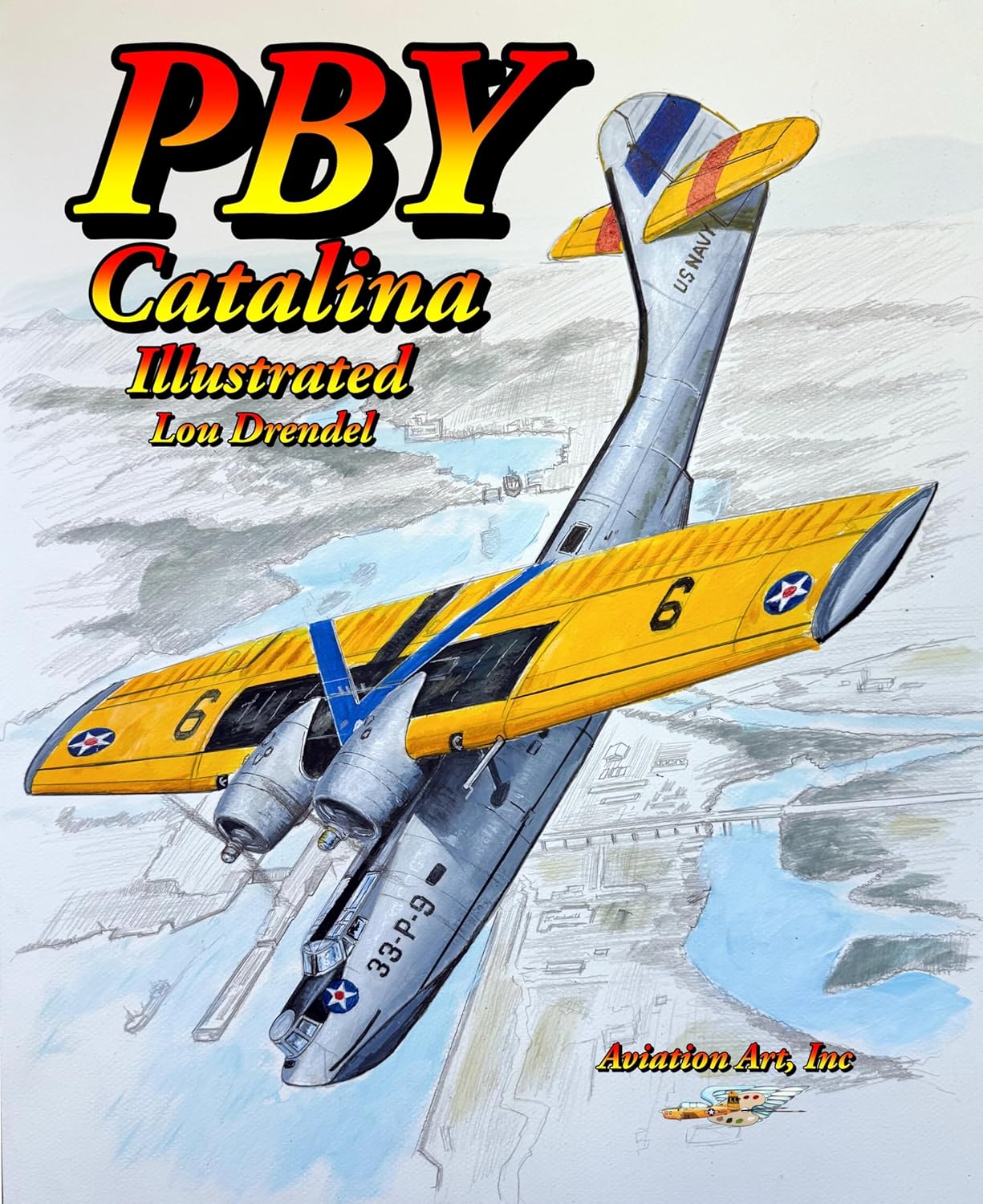
PBY Catalina Illustrated Kindle Edition

 4.9 (135 items)
 Limited Time Sale
$10.17 cheaper than the new price!!
Free cash-on-delivery fees for purchases over $99
Product details
| Management number | 219235166 | Release Date | 2026/05/03 | List Price | $6.78 | Model Number | 219235166 | ||
|---|---|---|---|---|---|---|---|---|---|
| Category | |||||||||
Almost three quarters of the earth’s surface is covered by water, so it is not surprising that flying boats were a significant component of early trans-ocean and inter-ocean travel. As American influence expanded across the broad reaches of the Pacific Ocean, and Japanese Imperial expansionism in the 1930s threatened international commerce, the U.S. Navy was in need of a long-range patrol plane to cover the Pacific. Thus was born one of the most iconic aircraft of World War II.The Patrol Bomber Y (Y was the manufacturer designator for Consolidated Aircraft Company) was not fast, and to the casual observer, was not pretty, but it was effective and durable. So effective, in fact, that it became the most heavily produced flying boat in history. It saw service in every theatre of World War II, and was flown by all branches of the United States military and 31 other nations. Though the Pacific was what inspired the creation of the PBY, it also served heroically in the Atlantic, where Catalinas were credited with sinking 40 German U-Boats. An RAF PBY, flown by a U.S. Navy pilot, spotted the German Battleship Bismarck steaming for refuge, leading to the sinking of Germany’s largest warship. PBYs also spotted the Japanese fleet headed for Midway, allowing the Navy to sink 4 Japanese carriers, blunting Japan’s advance across the Pacific. PBYs owned the night skies of the Pacific, sinking record number of Japanese ships.After World War II, the Catalina was converted to an aerial yacht for those who could afford that level of luxury. It was used as a fire bomber, and continued in the service of several foreign countries. It may have been deemed “obsolete” in 1939, but it was too useful to die, and the basic design is being considered as this is written for conversion to turbo-prop power and strengthening for ever-greater utility. This visual history of the Catalina begins in the early 1930s, and almost a century later, is still unfolding. As would be expected from a long and diverse career, the visual history of the Catalina is rich with varied and colorful markings. The military colors may have been muted, but those that followed were anyting but, and this “Illustrated” title shows many original and more contemporary examples. Read more
Aviation

![July 1941: VVS Air Operations during the Great Patriotic War [Print Replica] Kindle Edition](https://m.media-amazon.com/images/I/81fzi4XYmnL._SL1500_.jpg)


Accessories


Correction of product information
If you notice any omissions or errors in the product information on this page, please use the correction request form below.
Correction Request Form