



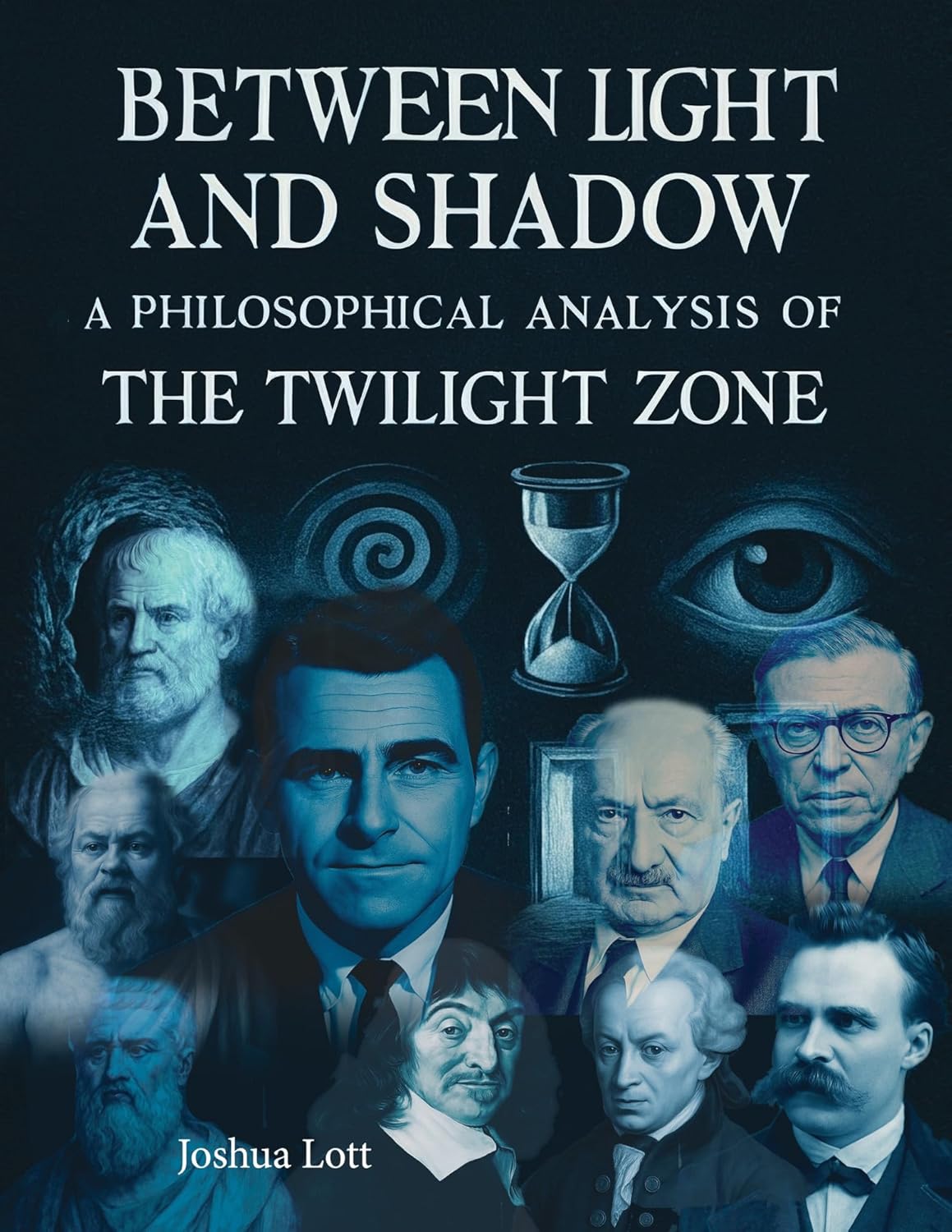
Between Light and Shadow: A Philosophical Analysis of The Twilight Zone Paperback – August 4, 2025

 4.9 (134 items)
 Limited Time Sale
$19.60 cheaper than the new price!!
Free cash-on-delivery fees for purchases over $99
Product details
| Management number | 219239305 | Release Date | 2026/05/03 | List Price | $13.07 | Model Number | 219239305 | ||
|---|---|---|---|---|---|---|---|---|---|
| Category | |||||||||
Debuting on television in 1959, Rod Serling's original incarnation of The Twilight Zone remains a popular, critical, controversial, and relevant staple of American culture, with many episodes of this great series permanently embedded in the American popular culture consciousness. While many episodes serve the purpose of simple fun, escapist entertainment, the majority delivered haunting and portentous messages through morality tales with ironic twists designed to make audiences think more deeply and critically about the human condition, the nature of existence, truth, knowledge, and perception, the struggle between good and evil, the consequences of human progress, and humanity's future. The term "twilight zone" originally applied to aeronautics and oceanography, referring to the time of day at which one could not easily distinguish between the ocean's horizon and the sky, near the very end of the day. In the context of Serling's television series, the twilight zone refers to the point at which perception and reality overlap, making it difficult to discern the difference, comparable to navigating a darkened room without a guiding light. This text explores, analyzes, and interprets this meaning of the "twilight zone" both generally and in terms of the themes on which specific episodes focus. After an introduction that explains the enduring relevance of The Twilight Zone to both modern life and philosophy, Part I reconstructs a "Grand Unified Theory" of reality based on several famous quotes from Rod Serling and various episodes of the Zone, which amounts to a Platonic philosophical worldview, whereas Part II consists of chapters on specific episodes and philosophical themes within The Twilight Zone. Read more
Logic & Language


Camera Mounts





Correction of product information
If you notice any omissions or errors in the product information on this page, please use the correction request form below.
Correction Request Form